
 Discuss your school project
Learning environments
Why movement matters in the classroom.
Are we designing classrooms around how children learn, or how we expect them to sit?
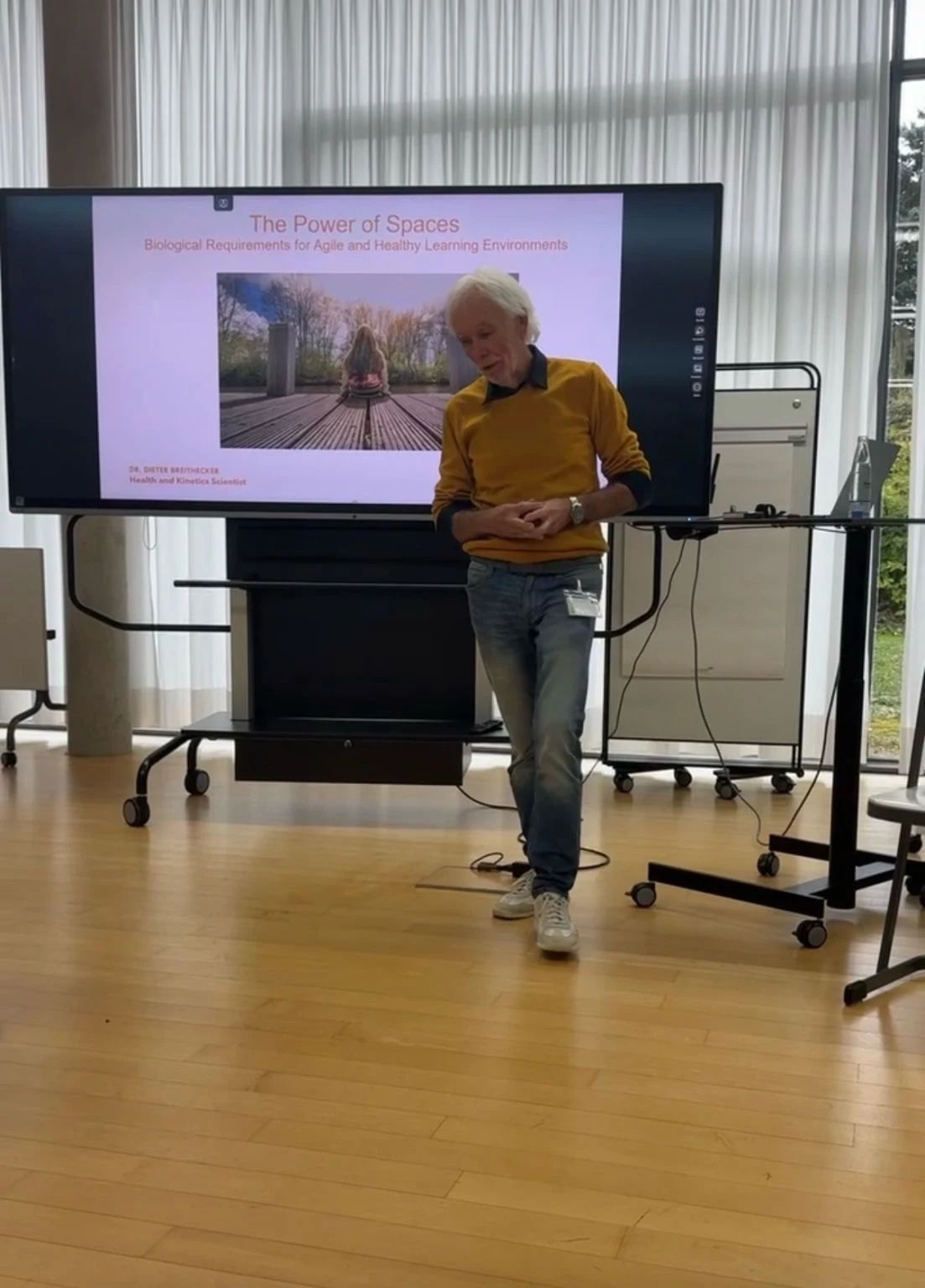
During our recent visit to VS in Germany, Dr Dieter Breithecker gave a thought provoking presentation on movement, sensory needs and learning environments. He had us standing, balancing and moving throughout the session, making us participants in the ideas he was explaining.
My main takeaway was simple. Movement deserves a place throughout the learning day.
Look at what movement may be doing.
A child shifting position or moving while seated may be finding a way to stay comfortable and engaged. Before asking them to sit still, it is worth considering what that movement is doing for them.
Children have different needs, and these can change with the task and the time of day. Classroom planning should make room for those differences, giving pupils suitable ways to change position while taking part in the same learning activity.
Consider the whole environment.
Dr Breithecker also reminded us to look beyond the furniture. Daylight, fresh air, acoustics and opportunities to change position all deserve attention when we design learning spaces.
A furniture plan is most useful when it considers the people using the room, the activities taking place and how different settings will work together.
Make choice practical.
Choice does not have to mean a complete redesign. It can begin with a few carefully planned options that staff and pupils can use comfortably during the day.
Active seating
Chairs that allow gentle movement, alongside suitable options such as Hokki stools, can offer different ways to sit. Selection should reflect pupil size, support needs and the activity.
Standing opportunities
A suitable standing work surface gives pupils another position for an activity. Consider access, working height and clear circulation alongside seated places.
Learning on the floor
Where space and pupil needs allow, FloorFriends and suitable floor seating can create another setting for reading, discussion or shared activities.
These options need to work within a clear classroom layout. Flexible tables and mobile storage, including Shift+ Landscape, can help define different learning zones while keeping access and supervision in view.
Explore our flexible classroom furniture and SEND classroom furniture pages for examples of how these choices can be planned together.
A useful question for your next classroom review.
How much freedom to move does your classroom offer?
For me, this is what makes working with VS so interesting. The conversation goes far beyond choosing tables and chairs. It is about creating environments that support the people using them.