Different working positions
Height adjustable tables, varied seating and open areas can support different bodies, tasks and forms of assistance.
 Working with
 Discuss your school project
SEND classroom furniture
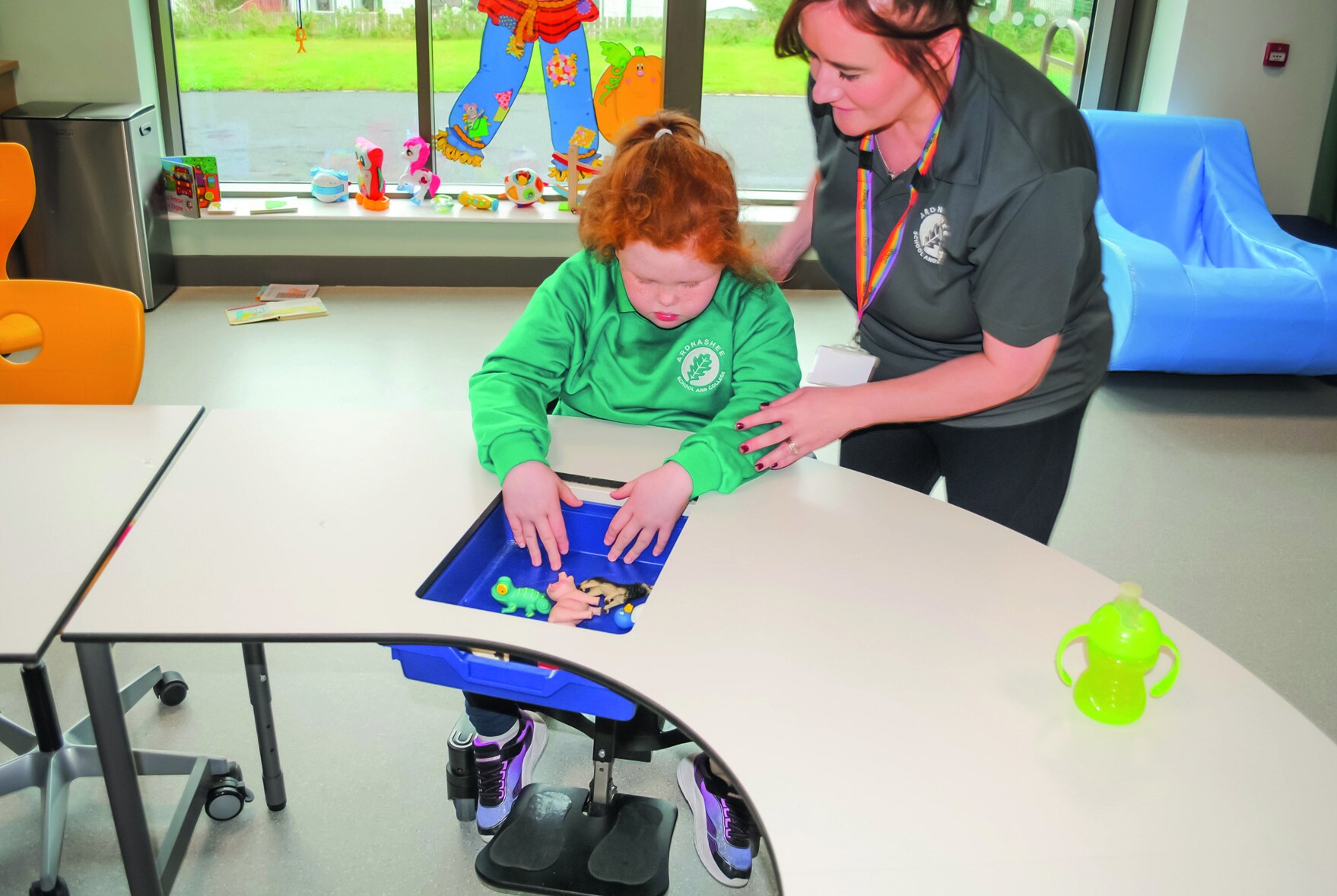
SEND learning environments need to respond to a wide range of physical, sensory and educational needs. Furniture can support this by providing choice, helping staff adapt spaces and allowing different activities to take place safely and comfortably.
Inclusive environments
A greater variety of furniture and settings can help more learners participate, regulate movement and work with appropriate support.
Planning should begin with the pupils, staff and activities rather than a standard furniture schedule. The same school may need settings for focused teaching, therapy, sensory regulation, collaborative learning, personal care and social interaction.
Madsen Design contributes product knowledge and experience from specialist school projects. Clinical or postural assessments remain the responsibility of appropriately qualified professionals, whose recommendations can then inform furniture selection.
Key considerations
Height adjustable tables, varied seating and open areas can support different bodies, tasks and forms of assistance.
Calmer settings, movement options and clear learning zones can give pupils more ways to manage stimulation and attention.
Mobile furniture allows staff to change the environment around individual, group, therapeutic and practical activities.
Planning for changing needs
The Third Teacher describes the learning environment as an active part of education, alongside teachers and peers. In a new special school, furniture planning can help spaces shift between individual support, therapy and group learning. Mobile and flexible layouts can support those changing activities, while clear circulation helps staff supervise and move around the room. Trial proposed settings in everyday use, then review access, supervision and cleaning with the school team. This complements the Northern Ireland Enhanced Support Model by supporting choice, participation and growing independence.
Harberton SEN School, Belfast
VS furniture has been supplied for 8 temporary classrooms at Harberton SEN School, providing a practical trial to inform the future school project.
Working with the school, Alpha and VS, the trial gives staff the opportunity to assess furniture and layouts through everyday teaching. Different settings allow them to explore group learning, individual work, floor level activity and quieter moments.
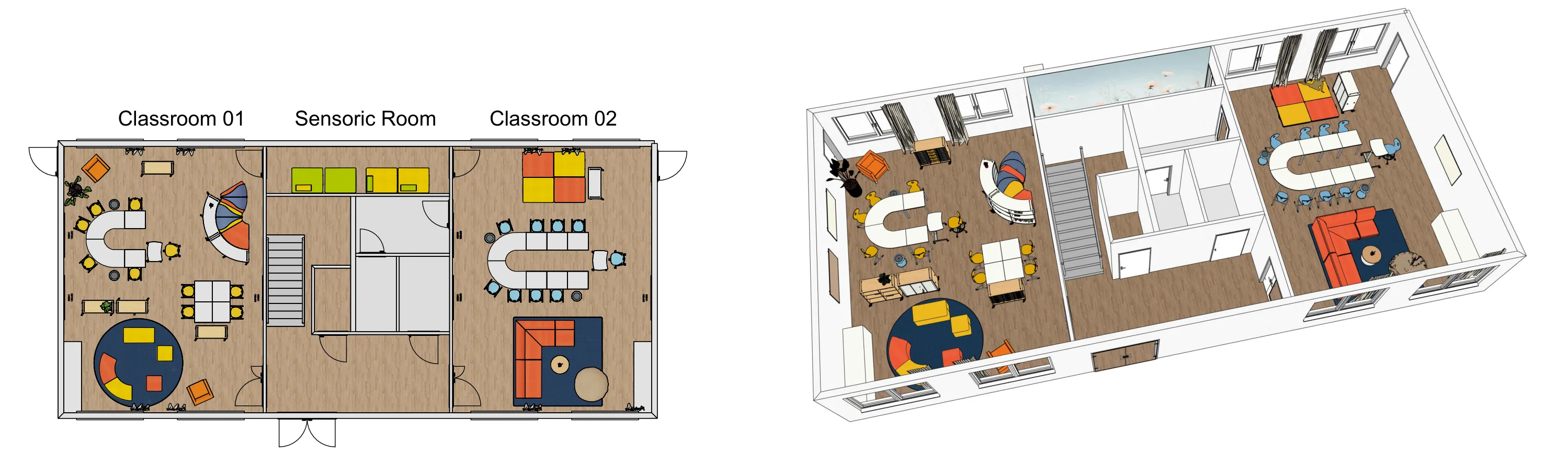
The proposal drawings below show 2 classroom layouts and a sensory room. Flexible group tables, mobile storage and varied seating illustrate how furniture can create different zones within the same space. These are proposed arrangements, rather than a record of every installed classroom.
Planning starts with the child and the activity. Giving pupils a choice of working positions, keeping circulation clear and allowing rooms to adapt helps the school test what works before making decisions for the future building.
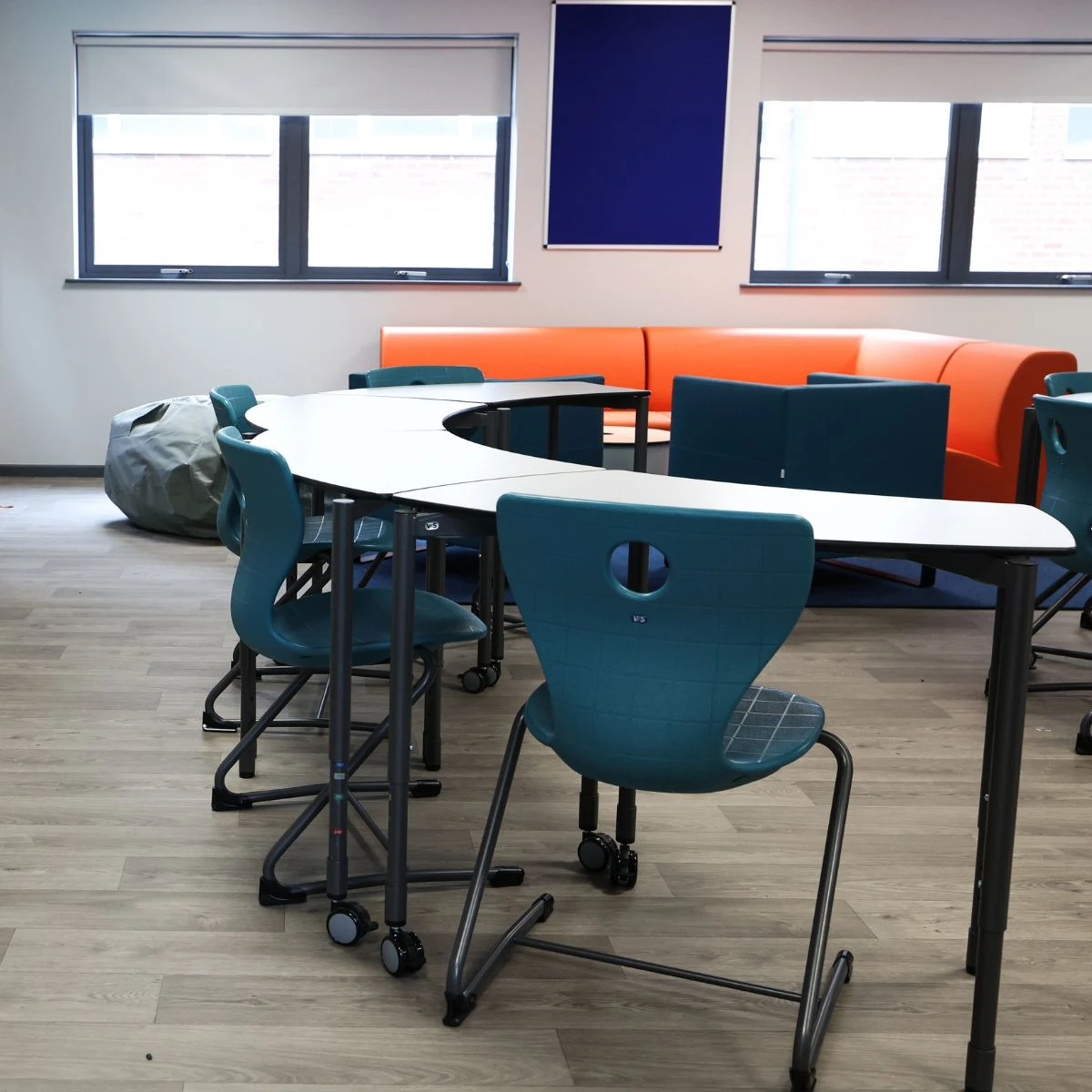
These recent photographs show the furniture installed in the temporary classrooms. Compare the curved group tables, mobile storage and floor level settings with the proposal above to see how the planning ideas translate into a real room. Staff can try different arrangements during the trial and use that experience to inform the future school.


Castle Tower SEN School
Castle Tower in Ballymena brings together 3 former SEN schools in a purpose built environment for around 300 pupils aged 3 to 19.
Following an 18 month trial, VS Shift+ furniture was selected to help staff reconfigure classrooms, shared spaces and breakout areas around different learners and activities.
View the full case studyRelevant experience
At Ardnashee SEN School and College, VS furniture supports individual focus, group learning, sensory support and therapeutic activity. Mobile and height adjustable products help staff adapt rooms around pupil needs.
These projects show why close collaboration is important. School teams, architects, furniture specialists and qualified advisers each bring different knowledge to the process.
View the Ardnashee case study