Tables that connect
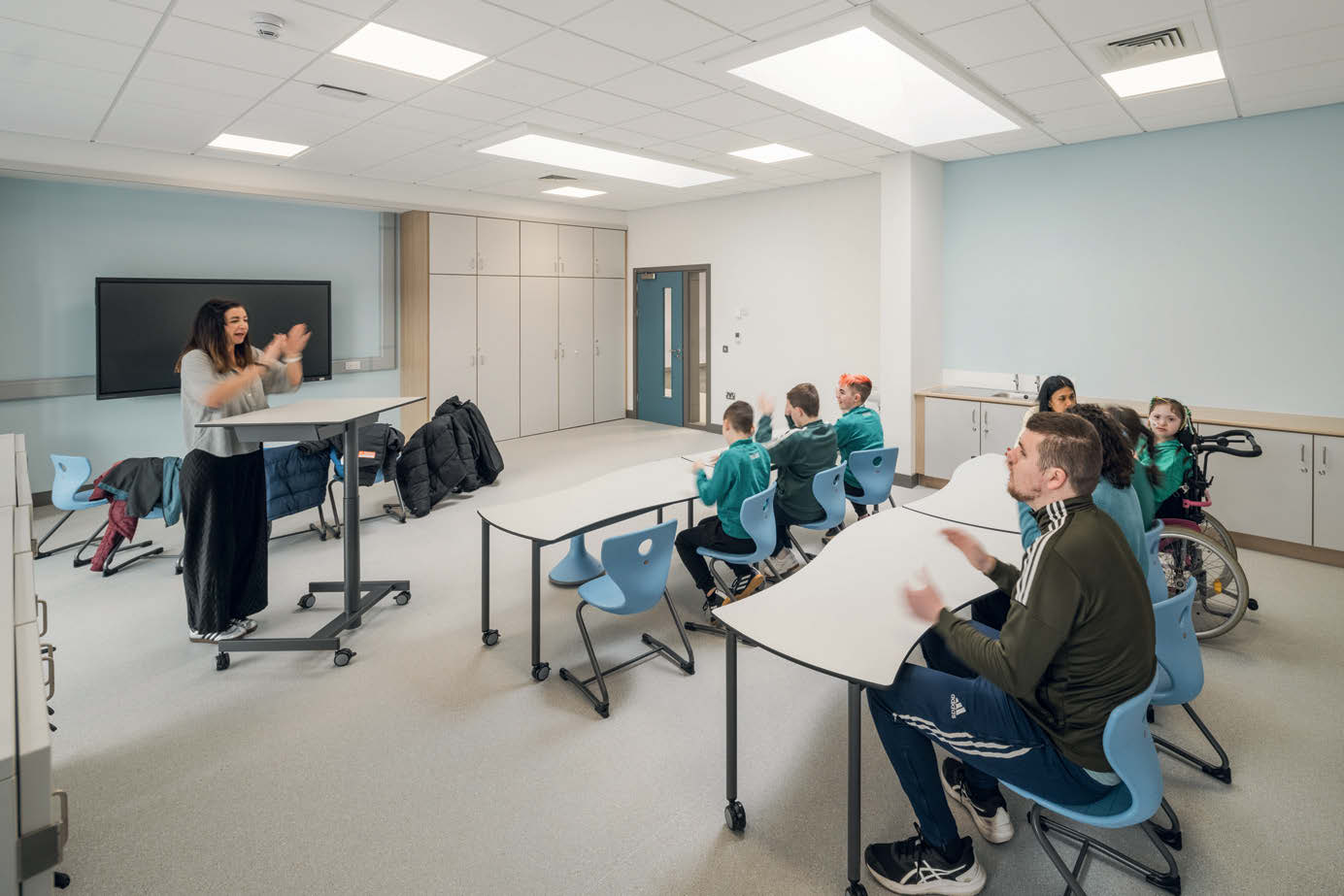
Single and group tables share the same curved edge, allowing different products to fit together as simply as building blocks.
 Working with
 Discuss your school project
Flexible classroom furniture
Flexible classroom furniture allows teachers and pupils to reshape a learning space around the activity. Individual focus, group work, instruction, presentation and reflection can all take place without the room being fixed in one arrangement.
Adaptable by design
A flexible classroom only works when furniture can be moved, combined and stored without disrupting teaching.
Lightweight and mobile products give staff and pupils more control over the room. A change of layout should support a change of activity, not become a complicated task.
The best solutions balance freedom with order. Tables need clear relationships, storage needs to help define space, and seating should support movement while remaining suitable for intensive educational use.

Shift+ by VS
Shift+ combines tables, seating and storage that can be arranged as a connected furniture landscape.

Single and group tables share the same curved edge, allowing different products to fit together as simply as building blocks.
Straight and curved storage units can divide open classrooms and create distinct learning areas without permanent walls.
Teachers can move between focused work, collaboration, discussion and presentation using the same coordinated range.

Learning landscapes
Shift+ Landscape refers to the straight and curved storage units that create furniture landscapes and learning zones. It is different from the Shift+ table range, although the products work together as one flexible system.
For suitable projects, a classroom evaluation can help staff and pupils experience how flexible furniture performs through everyday use before a larger commitment is made.
Classroom evaluationPlanning the space
Planning begins with the different situations the room must support. This might include teacher led instruction, paired work, group projects, independent study, movement breaks, digital learning and informal discussion.
From there, furniture can be selected and positioned to support those activities while keeping circulation, storage and supervision clear. Samples, demonstrations and visits to the VS showroom can help the project team compare options before specification.
See the project process